Why This Super Creamy Basque Burnt Cheesecake Deserves a Spot in Your Rotation
This super creamy Basque burnt cheesecake is one of those rare desserts that looks wildly impressive yet asks almost nothing of you in return. No water bath, no cracked-top anxiety, no fussy decorating — just a handful of ingredients, a hot oven, and about 30 minutes of bake time. The result is a deeply caramelized, almost smoky top sitting over an interior so soft and custardy it practically melts the moment it hits your tongue. If you have ever been intimidated by cheesecake, this is the recipe that will change your mind for good.
What makes this particular version stand out is its small-batch size — scaled for a 14 cm mold and four servings — which means you get a tall, dramatic slice without committing to a full restaurant-sized cake. It is the kind of dessert you can pull together on a weeknight and still feel like you have done something genuinely special.
The Hero Ingredients in a Great Basque Burnt Cheesecake
With only six ingredients, every single one carries its weight, so choosing well really does matter here.
Cream cheese: This is the backbone of the entire cake, so reach for a full-fat block-style cream cheese rather than a spreadable tub variety. Spreadable cream cheese contains stabilizers and extra water that will make your batter too loose and your final texture rubbery rather than silky. Let it come fully to room temperature before you start — cold cream cheese will leave lumps that are nearly impossible to whisk out later.
Whipping cream: Use a heavy whipping cream with at least 35% fat. The fat is what gives this cheesecake its signature richness and that molten, custardy center. Lower-fat creams introduce too much water and produce a noticeably thinner, less luxurious result.
Cake flour: Only 5 g goes in, but it acts as a gentle stabilizer that holds the structure together without making the texture dense or cakey. Cake flour has a lower protein content than all-purpose flour, which keeps the crumb tender and the interior closer to a set custard than a traditional cheesecake filling.
How to Make Basque Burnt Cheesecake Step by Step
Before you do anything else, preheat your oven to 220°C and make sure your cream cheese has been sitting at room temperature for at least an hour. This single step makes mixing dramatically easier and your batter noticeably smoother.
Building the batter: Place the cream cheese in a medium bowl and work it with a spatula, pressing and folding until it is completely soft and lump-free. This takes a minute or two of genuine effort — you want it smooth enough to write with. Add the sugar and continue mixing with the spatula until the two are fully combined and the mixture looks glossy and uniform. At this point it should smell faintly sweet and look like a very thick frosting.
Adding the dry and wet ingredients: Sift the cake flour directly into the bowl — do not skip the sifting, as even a small clump of flour will show up in the final texture. Switch to a whisk and blend until the flour disappears completely. Add the egg yolk first and whisk until it is fully incorporated, then crack in the whole egg and whisk again until the batter is smooth and a pale, creamy yellow. It should look cohesive and slightly thickened at this stage, with no streaks of yolk visible.
Finishing the batter: Pour in the whipping cream and whisk gently until everything comes together into a silky, pourable batter. It will be quite fluid — looser than a typical cheesecake batter — and that is exactly right. You should be able to pour it in a steady, ribbon-like stream.
Preparing the mold and baking: Line your 14 cm cake mold with parchment paper, letting it rise a few centimetres above the rim on all sides. This overhang is important because the cake puffs during baking and the paper guides it upward rather than outward. Pour the batter in, then lift the mold and tap it firmly on the counter three or four times. You will see small air bubbles rise and pop on the surface — keep tapping until they stop.
Slide the mold into your preheated oven and bake for 30 minutes. At around the 20-minute mark the top will start to turn a deep amber-brown and you will catch a faint caramel scent from the oven — that is your cue that everything is going exactly as planned. When done, the top should be a rich, dark mahogany color and the center should still have a distinct wobble when you gently shake the pan. That jiggle is not underbaking — it is the custardy interior you are after.
Remove the cake from the oven and let it cool completely in the mold at room temperature before unmolding. As it cools the center will set further, sinking slightly in the middle. Peel away the parchment carefully, slice, and serve.
Swaps and Tweaks Worth Knowing About
What if I don’t have cake flour? You can substitute with an equal weight of cornstarch in a pinch. It performs a similar structural role and keeps the texture tender. All-purpose flour will work too, but use slightly less — around 4 g — since its higher protein content can make the texture a touch firmer than ideal.
What if I only have one type of egg? The recipe uses both a whole egg and an extra yolk, which together add richness and help the center set to a custard-like consistency. If you only want to use whole eggs, two small eggs can stand in for the one whole egg plus one yolk combination, though the texture will be very slightly less rich.
Can I make this dairy-free? The results will differ significantly since both the cream cheese and whipping cream are structural ingredients here, but a full-fat dairy-free cream cheese and a high-fat coconut cream are the closest substitutes available. Expect a slightly different flavor profile and a softer set.
Want a more pronounced burnt flavor? Add an extra 2–3 minutes of bake time. The top will darken further and develop a slightly bittersweet edge that contrasts beautifully with the sweet, creamy interior.
Storing and Making This Cheesecake Ahead of Time
Once fully cooled, wrap the cheesecake (still in the mold if possible) tightly with plastic wrap and refrigerate for up to three days. Chilling actually improves the texture — the interior firms into a denser, more sliceable consistency that many people prefer to the freshly-baked version. To serve, bring slices to room temperature for about 20 minutes, or enjoy them cold straight from the fridge. This cheesecake does not reheat well in the microwave, as it tends to weep and lose its creamy texture. If you want a slightly warmed slice, a very brief 10 seconds at low power is the maximum.
Frequently Asked Questions
Why does my Basque burnt cheesecake still look liquid in the center when I take it out of the oven?
A wobbly center is completely intentional and correct for this style of cheesecake. The residual heat from the pan continues to cook the interior as it cools, and the center will set to a soft, custardy consistency by the time it reaches room temperature. If the center looks fully solid in the oven, the cheesecake has been overbaked and will have a much drier texture.
Do I need a springform pan for this recipe?
A springform pan makes unmolding easier, but it is not strictly necessary. Any round cake mold that is approximately 14 cm in diameter will work as long as you line it generously with parchment paper. The parchment does most of the work — you can simply lift the whole cake out by the paper once it has cooled completely.
Can I double this recipe to make a larger cheesecake?
Yes, doubling the ingredients and using a 20–22 cm pan works well, but you will need to increase the bake time to roughly 45–55 minutes while keeping the oven temperature the same. Watch the top closely rather than going strictly by time, since oven performance varies and the deeply caramelized color is your most reliable visual cue.
Why is my cheesecake top pale instead of deeply browned?
A pale top usually means the oven temperature was not high enough or the oven needed more time to fully preheat. Make sure your oven has been at 220°C for at least 15 minutes before the cake goes in, and consider using the upper rack position if your oven runs cool. Some ovens also benefit from a brief switch to the broil setting in the final two minutes to achieve that signature dark caramelization.
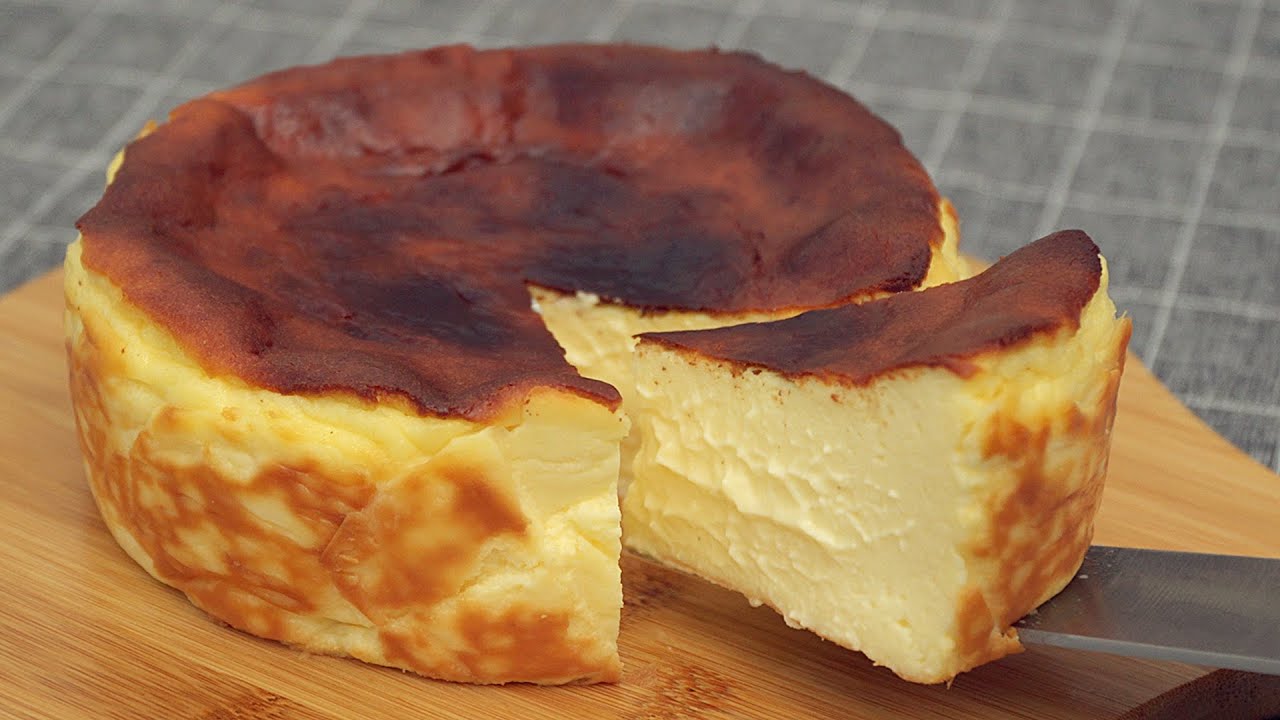
Super Creamy Basque Burnt Cheesecake
Ingredients
Method
- Gather: cream cheesePlace the cream cheese in a bowl and soften it with a spatula until smooth.▶ Watch this step
Gather: sugarAdd the sugar to the softened cream cheese and mix thoroughly with a spatula until well combined and smooth.▶ Watch this step
Gather: cake flourSift the cake flour into the cream cheese mixture and whisk until it is fully incorporated and the batter is smooth.▶ Watch this step
Gather: egg yolkAdd the egg yolk to the batter and whisk until it is completely blended in.▶ Watch this step
Gather: eggCrack in the whole egg and continue whisking until the mixture is smooth and uniform.▶ Watch this step
Gather: whipping creamPour the whipping cream into the batter and whisk until everything is well combined and the batter has a smooth consistency.▶ Watch this step
Line a 14cm cake mold with parchment paper, ensuring the paper extends above the rim of the mold.▶ Watch this step
Gently tap the mold on the counter a few times to release any trapped air bubbles from the batter.▶ Watch this step
Bake the cheesecake in a preheated oven at 220°C for 30 minutes, or until the top is deeply caramelized and the center is slightly jiggly.▶ Watch this step
Remove the cheesecake from the oven and let it cool completely in the mold before attempting to remove it.▶ Watch this step
Carefully remove the cooled cheesecake from the mold and parchment paper, then slice and serve.▶ Watch this step
Leave a Reply
You must be logged in to post a comment.